

In recent weeks, I’ve discovered a fascinating aspect of my artistic practice: a predominant use of the colour yellow. This realization surprised me, revealing a possibly subconscious preference for this hue. Interestingly, my inclination towards yellow may be deeply influenced by my Ashanti heritage, especially given the cultural significance of gold. It seems that, unknowingly, I have been drawn to the lively allure of yellow as a stand-in for gold.
My attraction to yellow is part of a broader appreciation for using vibrant colours in my art, an enthusiasm that likely stems from my Ashanti roots. My selection of vivid colours is not just for their aesthetic appeal; I use them to weave narratives about life’s varied experiences, transcending the simplicity of mood representation. For instance, blue in my work does not solely symbolize melancholy.
The act of mixing vibrant colours in my artwork serves a dual purpose: to tell a story through the visual content and to express deeper narratives through the deliberate choice of colours. Each colour, on its own, carries specific meanings, but together, they capture the essence of the emotion I wish to express.
Gold, in the context of my Ashanti heritage, represents royalty and wealth, a crucial element of our cultural expression. Similarly, yellow features prominently in the Kente cloth, worn by royals during significant ceremonies, often complemented by gold jewellery.
This introspection into my artistic preferences has highlighted a meaningful connection with my Ashanti heritage, a link I hadn’t fully appreciated until now. This discovery not only deepens my understanding of my cultural identity but also inspires a continued exploration of vibrant colours in my creative endeavors.
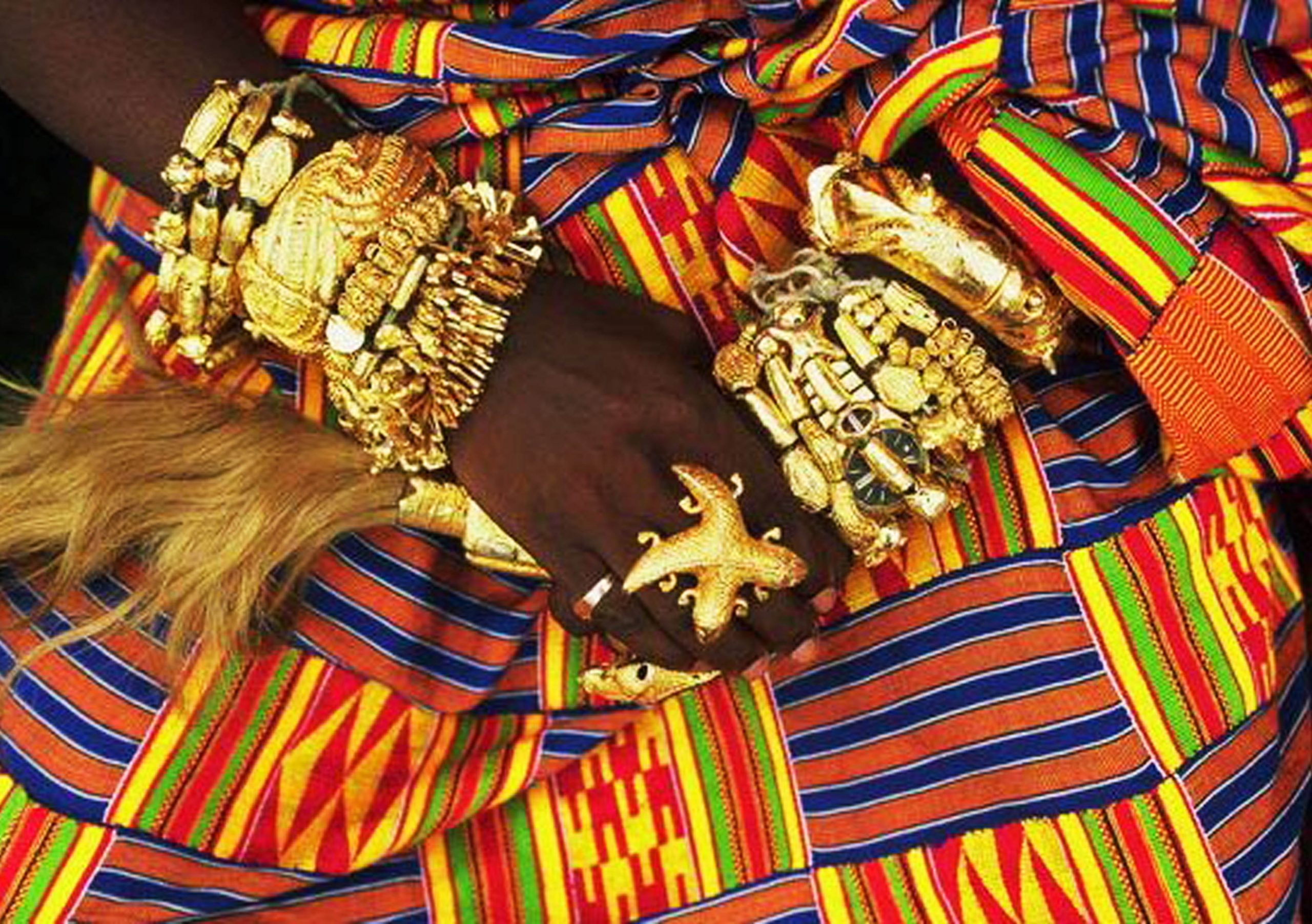
Photography by Bruno Zanzottera